Pakistani weddings are among the most vibrant, layered, and emotionally rich celebrations. Here's everything you need to know about the DJ's role at every stage.
Why You Need a Cultural Specialist
Pakistani weddings are not one-size-fits-all events. They unfold across multiple days, each with its own emotional tone, musical traditions, and cultural expectations. A DJ who does not understand the difference between a dholki night and a walima reception is going to miss the mark — and in front of your families, that is not a risk worth taking.
The music at a Pakistani wedding spans languages (Urdu, Punjabi, Pashto, Sindhi, English), genres (qawwali, Bollywood, bhangra, hip-hop, pop), and moods (devotional, romantic, celebratory, bittersweet). You need a DJ whose library and instincts can navigate that range fluently, not someone who will just queue up a generic South Asian playlist.
Cultural sensitivity extends beyond the music. Understanding when to lower the volume for religious moments, how to manage gender-separated events, and when to amplify energy versus let organic conversation take over — these are nuances that only come from real experience with Pakistani celebrations.
Dholki Night
The dholki is the most intimate and folk-driven of all the pre-wedding events. Traditionally hosted at home, this gathering centers around live dholak drumming, singing traditional wedding songs, and an atmosphere of warmth and anticipation. The DJ's role here is supportive, not dominant.
If live musicians are present, the DJ coordinates with them — providing amplification if needed, filling gaps between live sets with complementary tracks, and handling any microphone needs for informal speeches or games. The playlist should lean heavily into folk traditions: mehndi songs, Punjabi tappe, and classic film numbers that older family members love to sing along with.
The energy at a dholki is organic and communal. Guests gather in circles, sing together, and share stories. A skilled DJ reads this room and knows when to bring energy up with a dhol beat and when to pull back and let the natural joy of the gathering carry the moment.
Mayoun and Ubtan Ceremony
The mayoun or ubtan is a tender, playful event where the bride (and sometimes the groom) is adorned with haldi paste by close family members. The mood is soft and joyful — think laughter, teasing, and emotional moments between parents and their child approaching marriage.
Musically, this is not a dance party. The DJ provides a gentle soundtrack of romantic Urdu and Punjabi songs, film classics, and light instrumental pieces. Volume stays low enough for conversation to flow naturally. Some families incorporate specific traditional songs during the haldi application, and a knowledgeable DJ will have these ready.
If the event transitions into a more social gathering afterward, the DJ can gradually increase the energy, but the core of the mayoun should feel intimate and personal. This is about family, not performance.
Mehndi Night
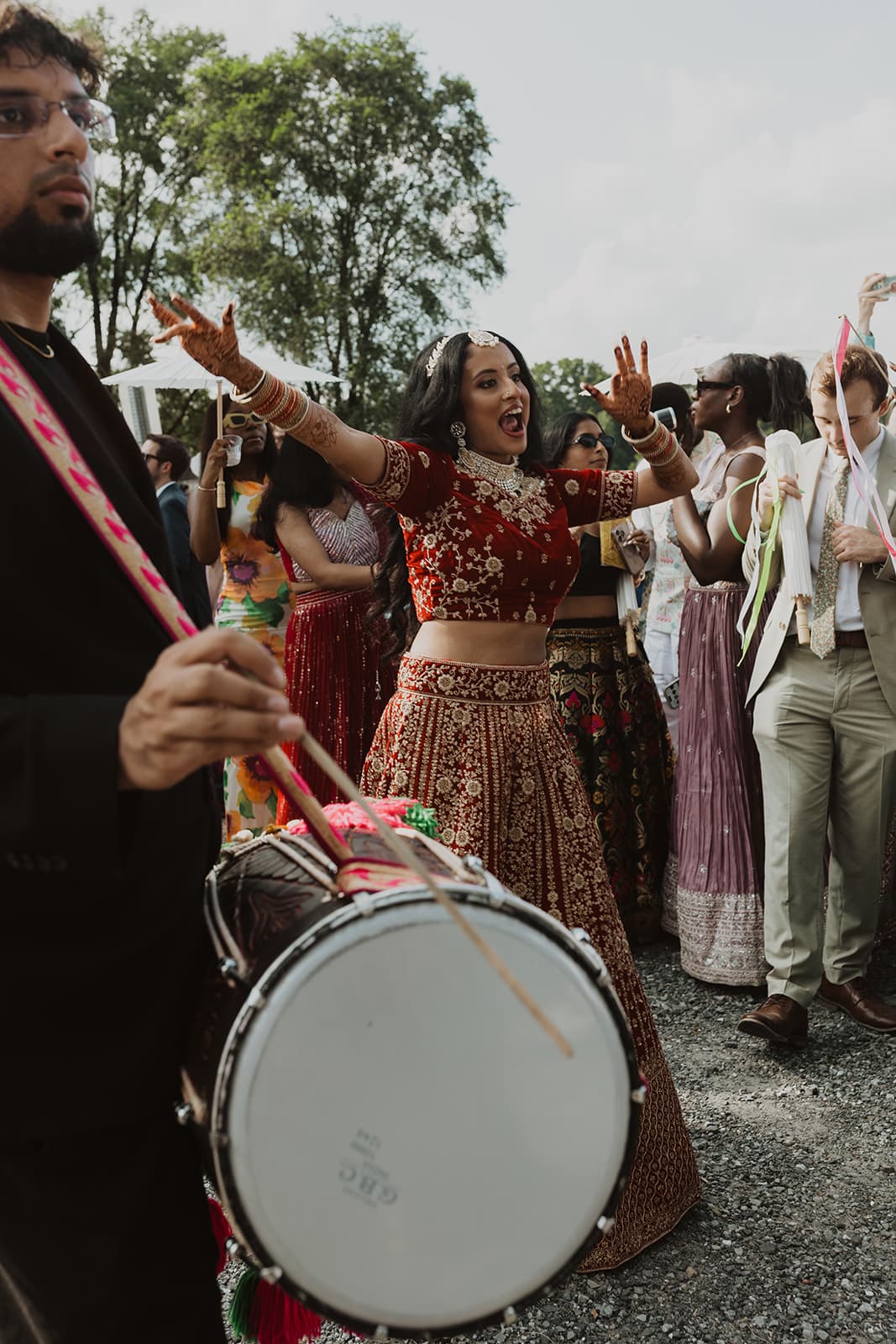
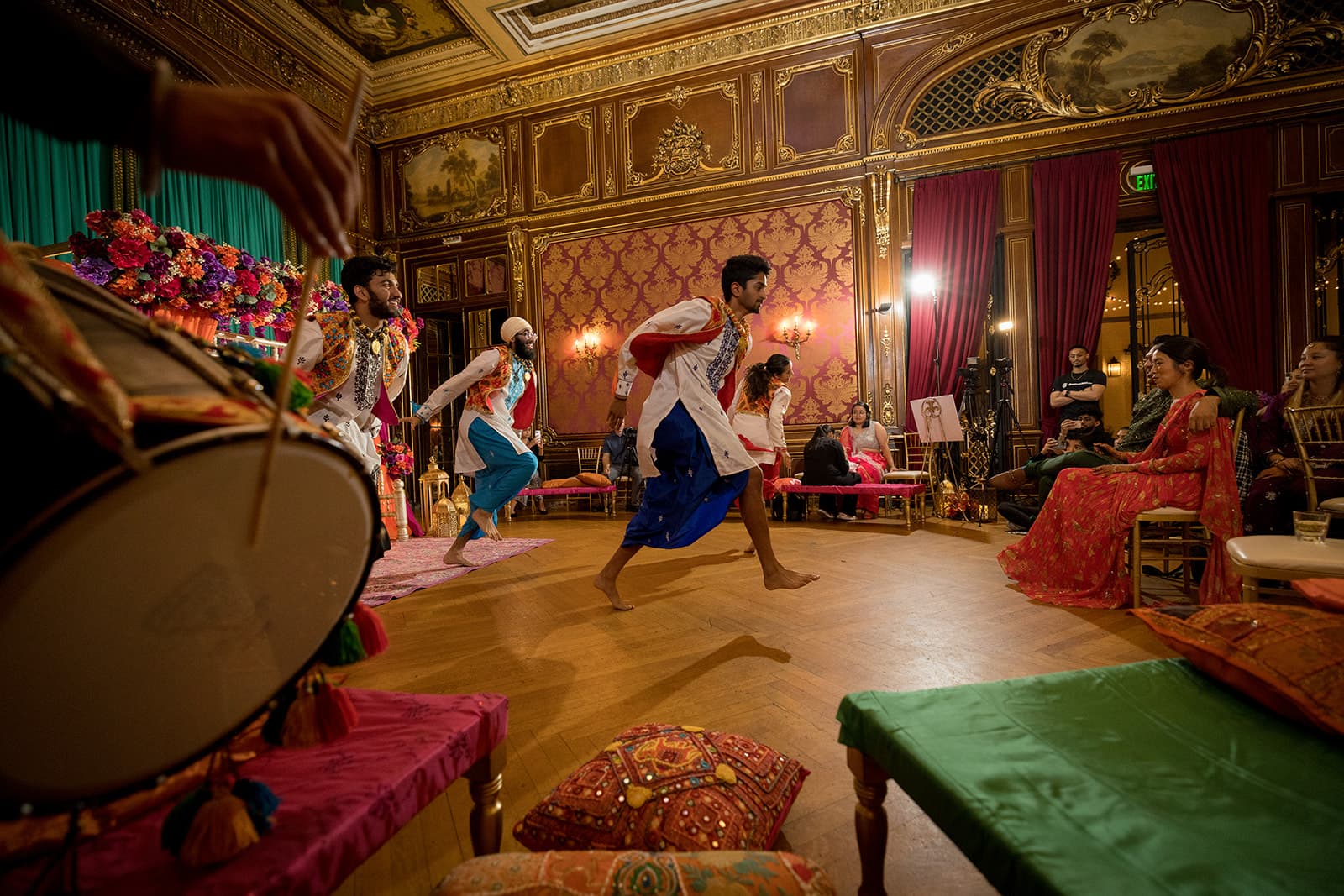
The mehndi is where the celebration truly ignites. This is the most performance-oriented and high-energy pre-wedding event, featuring choreographed dance performances, group numbers, games, and open dancing. The DJ is essentially the show director for the evening.
A typical mehndi timeline starts with guest arrival and background music as people mingle and get settled. The formal program kicks off with a welcome from the emcee, followed by the bridal or groom's entry — often a highly produced moment with specific songs, lighting effects, and coordinated choreography from friends and family.
Performance management is critical. The DJ needs a detailed list of every dance performance, the songs for each one (often custom medleys), sound levels appropriate for each act, and smooth transitions between performers. Technical issues during someone's choreographed number — wrong song, late start, volume problems — are memorable for all the wrong reasons.
After the formal program, the open dance floor segment should build from Bollywood crowd-pleasers to Pakistani pop hits to full-energy bhangra and dhol beats. The best mehndi dance floors blend all of this seamlessly, keeping all age groups engaged and the energy climbing throughout the night.
The Baraat Procession
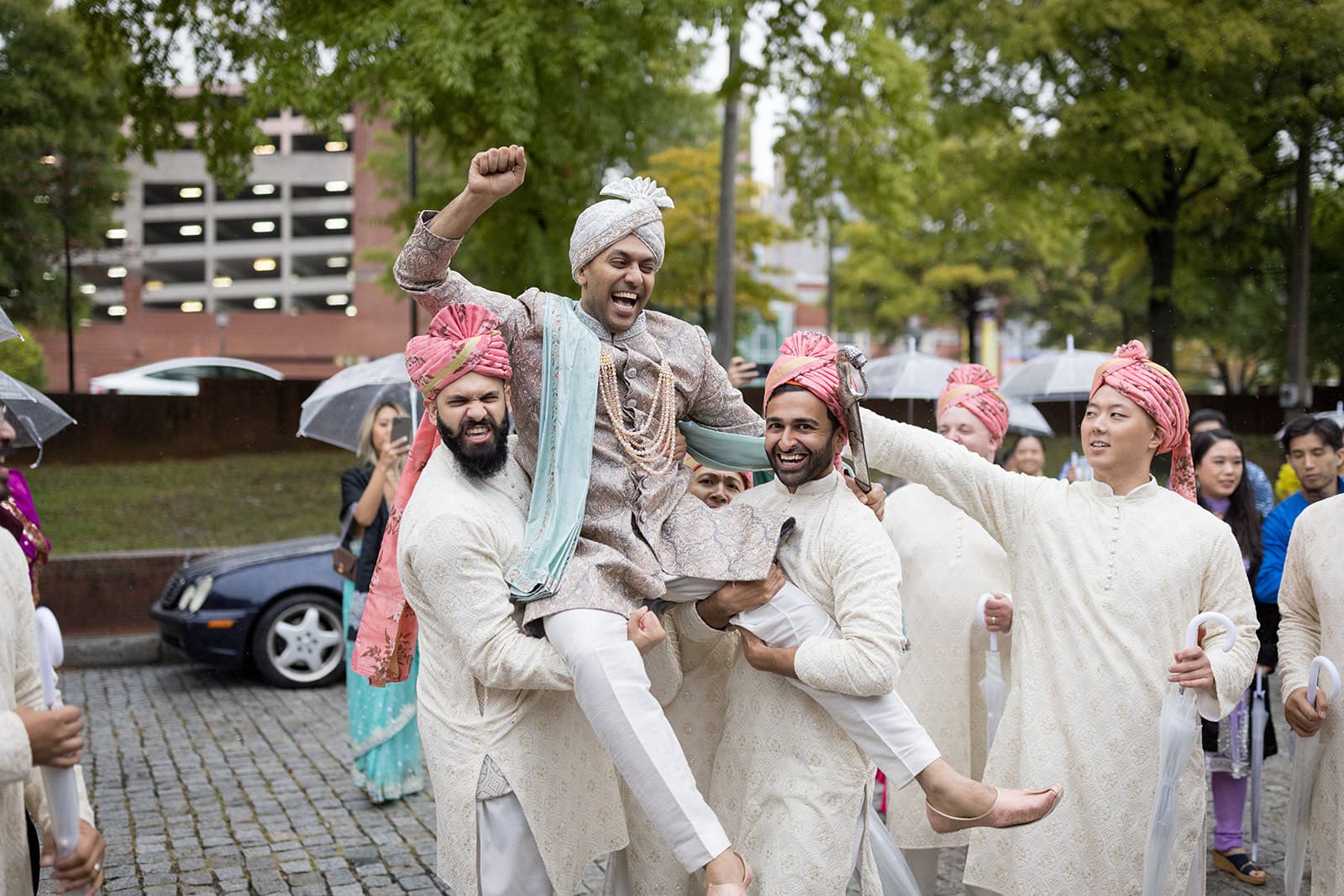
The baraat is the groom's grand arrival, and it should be the most electrifying moment of the entire wedding. This is maximum energy — dhol drums, bhangra dancing, car horns, cheering, and absolute jubilation as the groom makes his entrance accompanied by family and friends.
If a live dhol player is part of the baraat, the DJ coordinates closely with them, providing amplified music through outdoor speakers that complements the live drumming. Song selection is crucial: classic baraat anthems, high-energy Punjabi tracks, and crowd favorites that get everyone dancing in the street or parking lot.
Logistics matter here. The DJ needs portable or outdoor-capable speakers, often powered by battery or generator, positioned along the procession route. Sound needs to be loud enough to create excitement but controlled enough not to violate venue noise ordinances. Timing the music to the groom's arrival at the ceremony venue is the final piece — the energy should peak as he walks through the doors.
The Nikah Ceremony
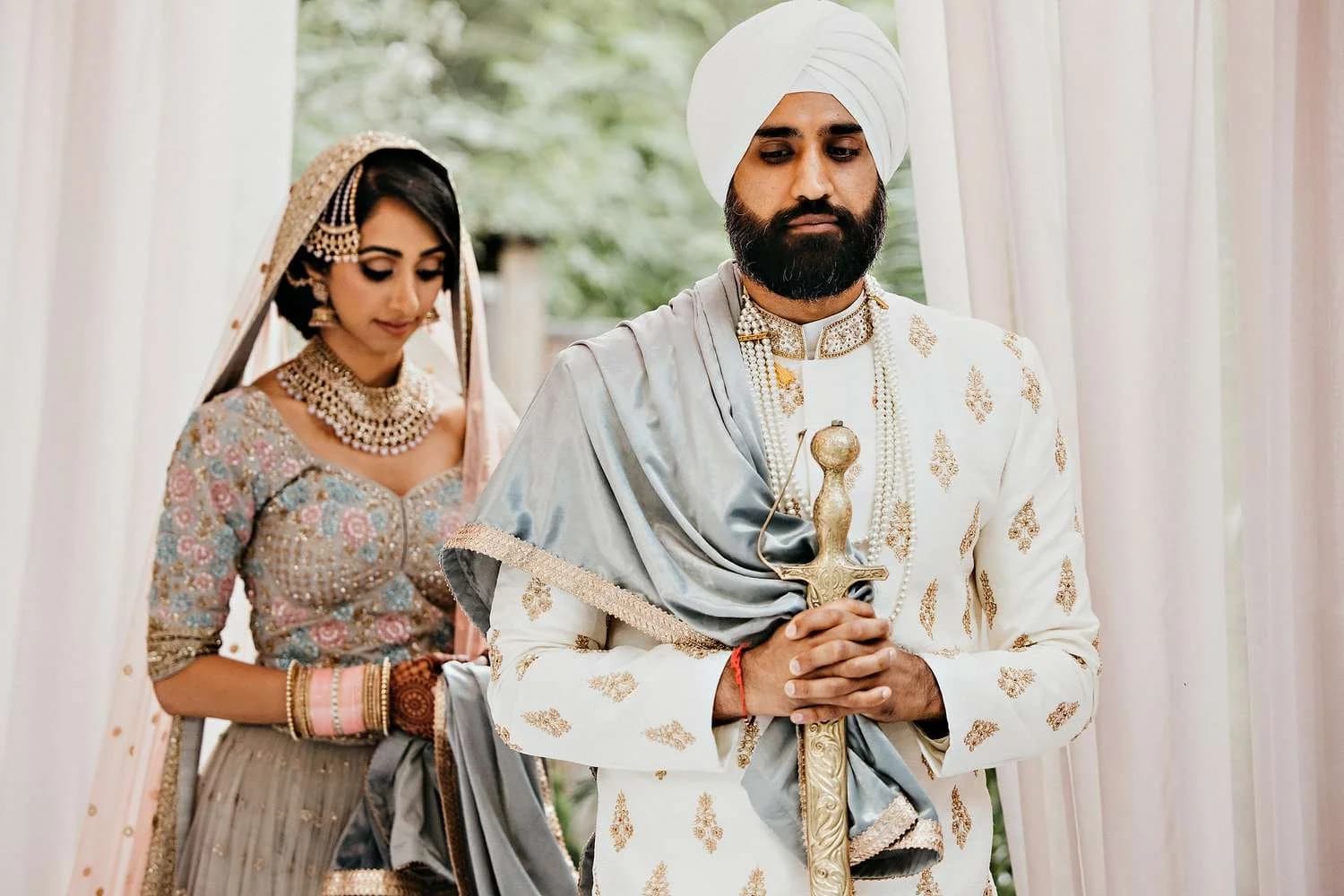
The nikah is the sacred Islamic marriage contract, and the DJ's role here is minimal but important. This is not a performance moment — it is a religious ceremony that demands respect and reverence. The DJ provides clean microphone audio for the imam, ensures the ceremony can be heard clearly throughout the venue, and plays soft instrumental nasheed or Quran recitation if requested.
Volume control and technical reliability are everything during the nikah. A feedback squeal during the marriage vows or a dead microphone during the imam's sermon would be deeply embarrassing. Professional DJs test every piece of audio equipment before guests arrive and have backup microphones ready.
Some families request specific nasheeds or Urdu poetry to be played before or after the nikah. Having these queued and ready — along with the correct pronunciation and context for any announcements — shows the level of cultural literacy that sets a specialist DJ apart.
Rukhsati — The Farewell
The rukhsati is one of the most emotionally charged moments in any Pakistani wedding. As the bride departs with her groom, surrounded by her family, the mood shifts from celebration to bittersweet farewell. This is a moment that requires extraordinary sensitivity from the DJ.
Music during the rukhsati should be soft, emotional, and meaningful — typically classic Urdu ballads, film songs about bidai or departure, or nasheeds. The volume should be low enough that the sounds of the moment — prayers, tears, whispered goodbyes — are not drowned out.
A good DJ knows to fade the music naturally as the moment unfolds, rather than abruptly cutting tracks or letting upbeat music accidentally play. Some families prefer silence during the actual departure, with music only before and after. Discuss this in detail during planning so the DJ knows exactly what the family wants.
Walima Reception
The walima is the final celebration, and it often takes the form of a reception that blends Pakistani tradition with contemporary party energy. The evening typically includes a cocktail hour, grand entrance, dinner, speeches, and open dancing — each segment requiring a distinct musical approach.
During cocktail hour, the vibe should be sophisticated and inviting — lounge remixes of Bollywood classics, chill Urdu tracks, and contemporary R&B set at a volume that lets guests catch up and congratulate the couple. The grand entrance is a production moment: a specific song, coordinated lighting, and an emcee introduction that sets the tone for the evening.
Dinner music stays elegant and conversational, transitioning through light Bollywood, classic Pakistani film music, and international easy-listening selections. Once dinner wraps and the formal program concludes, the dance floor opens with a strategic build.
The open dancing segment should progress through genres intentionally: start with Bollywood crowd-pleasers that get the hesitant dancers moving, transition into Pakistani pop and contemporary hits, escalate into bhangra and dhol-driven bangers, and weave in hip-hop, reggaeton, and top 40 to keep the younger crowd engaged. The final hour should be peak energy — the songs everyone knows and loves, played at full power.
Music Library Requirements
A DJ handling Pakistani weddings needs a library that goes far deeper than mainstream Bollywood playlists. You need classic qawwali for spiritual moments, contemporary Pakistani pop artists for the younger crowd, traditional mehndi songs that aunties will sing along to, and a robust collection of Punjabi bhangra for peak dance-floor moments.
Regional diversity matters. Pakistani families come from different provinces and cultural backgrounds, each with their own musical traditions. A Pashto family will have different expectations than a Sindhi or Muhajir family. Your DJ should ask about these specifics during planning and prepare accordingly.
Do not overlook the Western music side of the library either. Many Pakistani-American weddings feature a mix of cultural and mainstream music on the dance floor. The DJ needs to transition fluently between an Atif Aslam ballad and a Drake hit without the energy dipping.
What to Look For in a Pakistani Wedding DJ
Experience with Pakistani weddings specifically — not just South Asian weddings in general — is the most important qualification. Ask how many Pakistani celebrations they have performed at, and whether they have handled multi-day events with dholki, mehndi, baraat, nikah, and walima components.
Listen to their mixes or ask for video from past events. You want to see how they manage transitions between cultural segments, how they handle emcee duties in both English and Urdu, and whether the dance floor stays engaged throughout the night.
Personal rapport matters. You will be working closely with this person across multiple events over several days. They need to understand your family dynamics, respect cultural boundaries, and communicate clearly throughout the planning process.
Questions to Ask Before Booking
Start with the basics: How many Pakistani weddings have you DJ'd? Can you provide references from Pakistani families? Then get specific: Can you handle Urdu and Punjabi announcements? Do you have experience coordinating with live dhol players? What is your approach to the rukhsati — do you have a protocol for this sensitive moment?
Ask about logistics: Do you have outdoor-capable sound for the baraat? How do you manage sound for gender-separated events? What backup equipment do you carry? Can you accommodate multi-venue setups across different days?
Finally, discuss music curation: How do you build playlists for each event? Do you take family input on must-play and do-not-play songs? How do you handle the balance between Pakistani, Bollywood, and Western music at the walima? The answers to these questions will tell you whether you are dealing with a specialist or a generalist.
5 Common Mistakes to Avoid
Hiring a DJ who treats all South Asian weddings the same is the number one mistake. Pakistani weddings have distinct traditions, musical preferences, and emotional rhythms that differ from Indian, Bangladeshi, or Sri Lankan celebrations. A good DJ knows the difference and plans accordingly.
Skipping the planning meetings is another critical error. Each event in a Pakistani wedding has its own flow, and without detailed coordination, the DJ will be guessing — and guessing leads to awkward moments. Invest the time in thorough planning sessions for each event.
Not communicating family preferences clearly leads to problems on event day. If the groom's side loves Pashto music and the bride's family prefers Bollywood, the DJ needs to know this in advance so they can balance the playlist and make both sides feel represented.
Underestimating equipment needs, especially for outdoor baraat processions and large ballroom walimas, results in sound quality issues that affect the entire guest experience. And finally, waiting too long to book means the DJs who truly specialize in Pakistani weddings may already be taken for your date.
The DJ Taj Productions Difference
At DJ Taj Productions, Pakistani weddings are a core part of what we do. We understand the emotional arc from dholki to walima, we carry the musical library and cultural knowledge to deliver at every stage, and we approach every event with the preparation and respect it deserves.
Our team has performed at dozens of Pakistani celebrations across the DMV, from intimate home dholkis to grand ballroom walimas with 500+ guests. We coordinate with live musicians, manage multi-day timelines, and provide the production value that makes each event unforgettable.
If you are planning a Pakistani wedding and want a DJ who truly gets it, we would love to connect and start planning together.
Ready to Elevate Your Event?
Let DJ Taj Productions bring the energy, expertise, and production value your celebration deserves. Explore our South Asian Wedding Services or Live Dhol & Musicians, or browse more articles on the DJ Taj blog.
Get a Free Quote